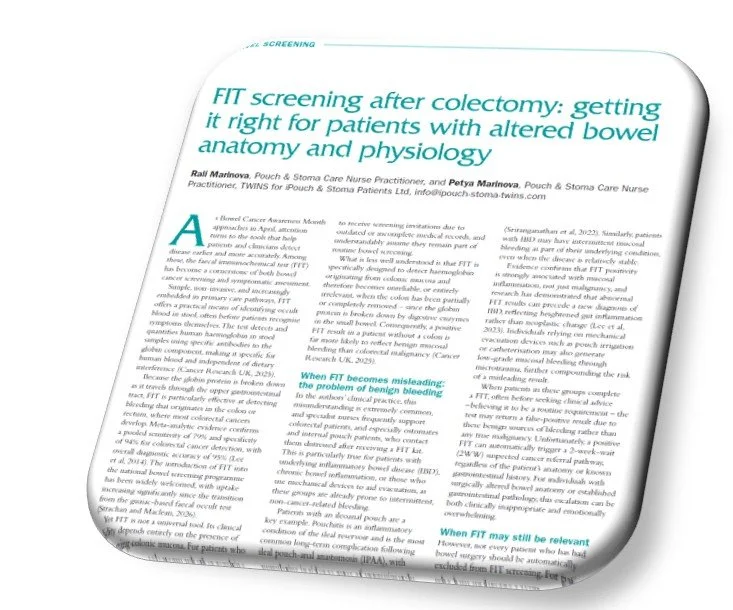
FIT Testing After Bowel Surgery
Below is only a summary, but if interested, you can access our full BJN article here. Please note, it is a paid platform, and the BJN requires you pay membership fees.
Hints & Tips for Ostomates, Pouchies & Anyone With Altered Bowel Anatomy
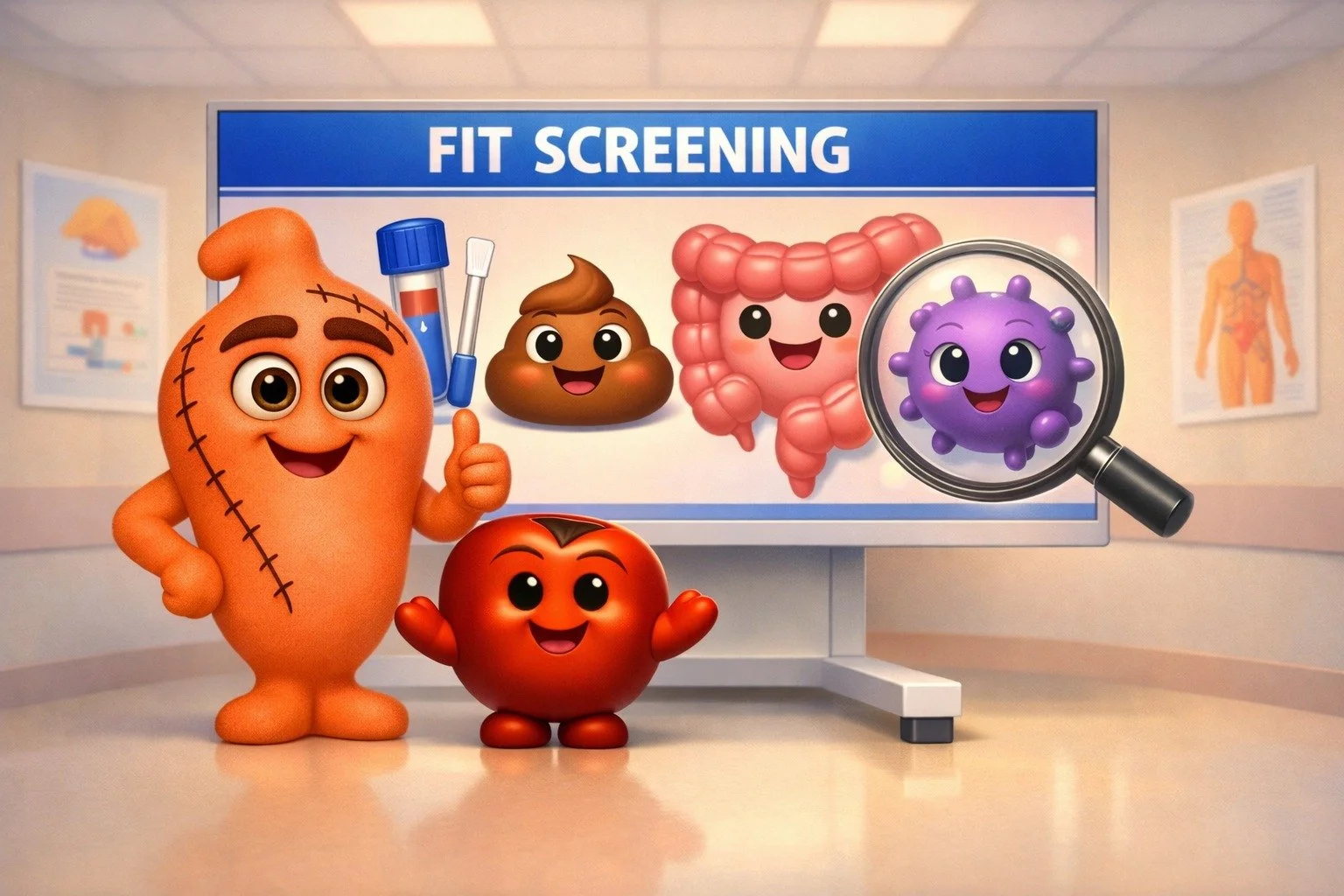
Many people are surprised, and sometimes alarmed, when a FIT (faecal immunochemical test) kit arrives after bowel surgery. If you have a stoma, an ileoanal pouch (ipouch), or part of your bowel removed, it’s completely understandable to question whether the test still applies to you.
This guide explains when FIT is useful, when it isn’t, and how to avoid unnecessary worry.
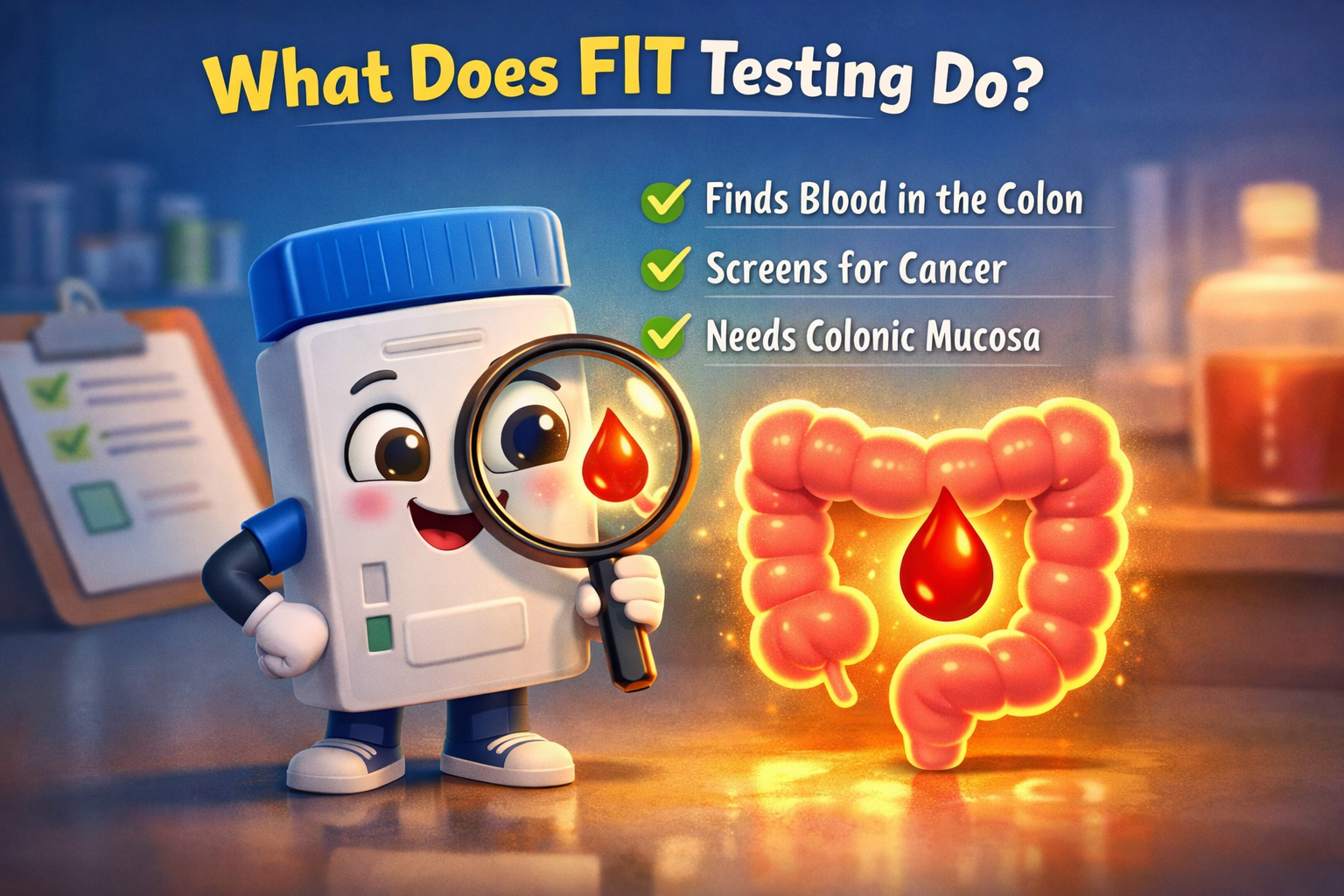
What FIT Actually Measures
FIT detects tiny amounts of human haemoglobin in stool. It is designed to pick up bleeding from the colon, which is why it is so effective in bowel cancer screening.
As the article notes, “FIT becomes unreliable, or entirely irrelevant, when the colon has been partially or completely removed.”
This is because the globin protein is broken down in the small bowel, so bleeding from higher up, including Ipouch or small‑bowel tissue, is not detected reliably.
FIT Screening After Colectomy: Getting It Right for Patients with Altered Bowel Anatomy and Physiology
Below is a summary of the key points from our BJN article. (Please note: thefull articleis on a paid platform.)
The FIT test works extremely well when the colon is present. After bowel surgery, especially surgery that removes the colon, creates a stoma, or forms an ileoanal pouch, FIT may become misleading or clinically irrelevant. Many people still receive FIT kits because medical records are not always updated, which can cause confusion and unnecessary anxiety.
🌟 Quick Tips
Don’t panic if you receive a FIT kit - invitations are often generated automatically.
Check what bowel you still have. FIT only works if a functioning section of colon or rectum remains.
If you have no colon (total colectomy) or an ileoanal pouch, FIT can be false‑positive due to pouch inflammation, small‑bowel bleeding, or minor trauma.
If you still have some colon (e.g., after a segmental colectomy), FIT may still be appropriate - follow clinical advice.
If unsure, ask first. Contact your GP, screening service, or your colorectal/stoma/pouch nurse.
If you have an ileoanal pouch, FIT is not appropriate; your surveillance is usually via pouchoscopy.
🚫 When FIT Becomes Invalid or Misleading
FIT does not work properly when the colon is removed. Blood from the small bowel or pouch breaks down before it reaches the test, leading to false positives from benign inflammation or microtrauma.
FIT is unreliable in:
Total colectomy
Colon removal and formation of permanent ileostomy or ileoanal pouch
Inflammatory bowel disease (Crohn’s/UC), where intermittent bleeding is common
Mechanical evacuation (irrigation/catheterisation), which can cause minor bleeding
“FIT is specifically designed to detect haemoglobin originating from colonic mucosa and therefore becomes unreliable… when the colon has been removed.”
A false‑positive FIT can automatically trigger a 2‑week‑wait (2WW) cancer referral, leading to unnecessary distress and investigations.
✔️ When FIT May Still Be Appropriate
FIT remains meaningful when some functioning colon is still present, such as:
Segmental colectomy (right hemicolectomy, sigmoid colectomy)
Defunctioned colon (colon still present but diverted by a stoma)
“If colonic mucosa is present… the organ remains at neoplastic risk.”
📦 If You Receive a FIT Kit After Bowel Surgery
Pause and check your anatomy. Look at your operation notes or ask your GP/colorectal team.
Ask for tailored advice from your GP, colorectal team, stoma nurse, or pouch nurse.
Update your records if FIT is not appropriate so future kits aren’t sent unnecessarily.
Why You Might Still Receive a FIT Kit
Many people with stomas or pouches receive FIT kits because:
GP records haven’t been updated
Hospital and screening databases don’t always communicate
The system assumes eligibility unless told otherwise
As the article states, “Receiving a screening invitation does not signal suspicion of recurrence.” It may be an administrative issue - not a clinical concern.
When Specialist Surveillance Is More Appropriate
If FIT isn’t suitable for you, you may instead need:
Pouchoscopy
Flexible sigmoidoscopy
IBD surveillance
Stoma‑site review
Tailored follow‑up for hereditary conditions
💬 Emotional and System Impact
Receiving an inappropriate FIT kit can:
Trigger anxiety or fear of recurrence
Cause worry while waiting for advice
Confuse patients with stomas or ipouches
Bring back memories of diagnosis or treatment
Lead to unnecessary 2WW referrals
Waste endoscopy capacity and NHS resources
“The psychological effect of receiving an inappropriate FIT kit should not be underestimated.”
You are not overreacting - the system simply isn’t perfect.
👩⚕️ The Nursing Role
Nurses are often the first point of contact when a FIT kit arrives unexpectedly. They help by:
Explaining FIT relevance based on surgical history
Reassuring patients that a screening invitation does not imply recurrence
Preventing inappropriate referrals
Directing patients to correct surveillance (e.g., pouchoscopy)
Ensuring records are updated so FIT kits aren’t sent in error
“Nurses are uniquely positioned to bridge the gap between population-level screening systems and the individual realities of patients with complex bowel histories.”
⚠️ When to Seek Urgent Medical Advice
Seek help if you experience:
Ongoing or heavy bleeding from your bottom, stoma, or ipouch
New or persistent changes in bowel habit or stoma output
Unexplained weight loss or worsening abdominal pain
A 2WW referral based on a FIT result that seems inappropriate for your anatomy
🧭 Bottom Line
FIT is a powerful and effective screening tool - but only when used in the right anatomical context. After bowel surgery, especially when the colon is removed or altered, FIT may be the wrong tool, leading to false positives, anxiety, and unnecessary referrals.
If you’re unsure whether FIT applies to you, speak with a clinician who understands your surgical history.
Key Takeaways
FIT only works when colonic mucosa is present.
People with pouches, or total colectomies with a permanent ileostomy usually should not complete FIT.
Benign inflammation can cause false positives.
A FIT kit does not mean anyone suspects cancer.
If unsure, always check with your specialist team.
Read our BJN article on FIT screening below…